Change or rekey · Brantford
Deadbolt Installation
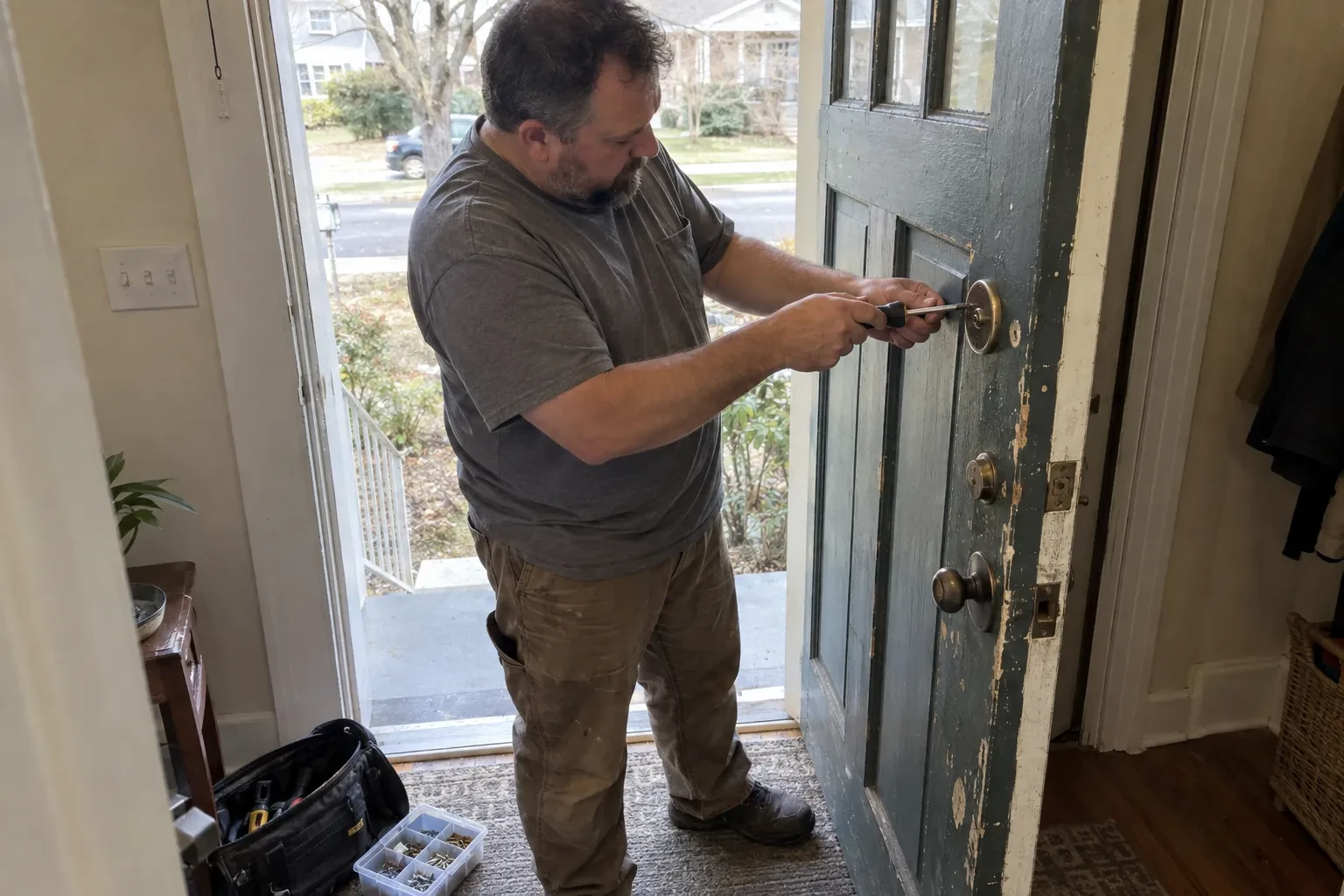
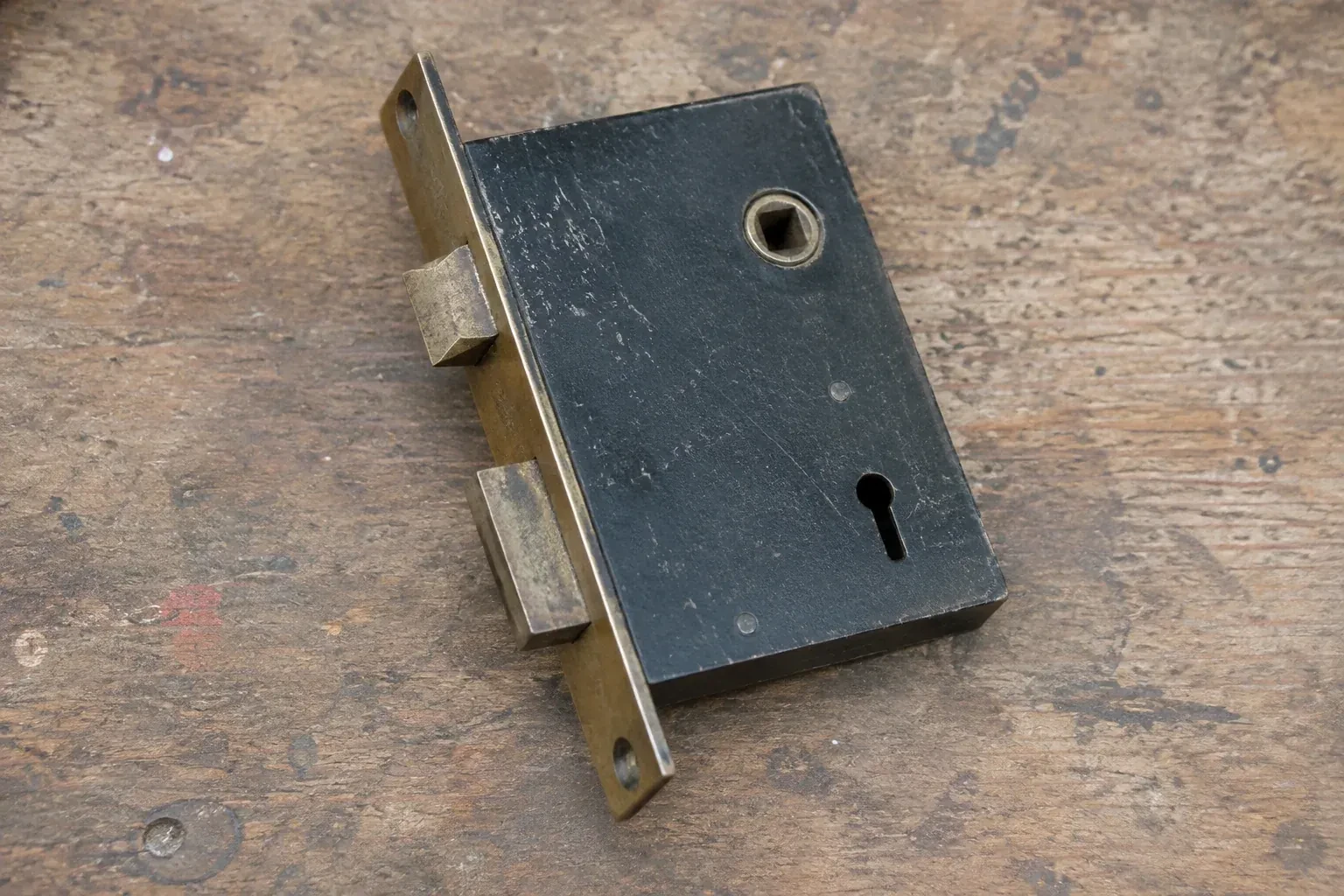
The back door has a deadbolt in name only: a short bolt, a thin brass strike held by two little screws, and a jamb you can flex with your palm. It was fine for a builder's showing.
Call now · open 24/7(548) 900-9717In plain words
Deadbolt installation puts a solid bolt lock on a door that either has none or has one that is past its useful life. Unlike the spring latch in a knob or lever, a deadbolt is a straight bar of metal that only moves when the key or thumb-turn moves it, so a card slipped into the gap or a shove against the door does nothing. The locksmith bores the door if needed, fits the bolt and cylinder, cuts a proper pocket in the frame and secures a reinforced strike with screws long enough to reach the framing. You are left with a door that locks with a firm, full throw.
How the visit goesYou moved in three weeks ago. The previous owner left a handful of keys, none labelled, and the bolt on the side door rattles in its housing. You would like every exterior door to bolt, and to know exactly who can open it.
Deadbolt Installation · Brantford
How the visit goes
- 1
How the door hangs and closes
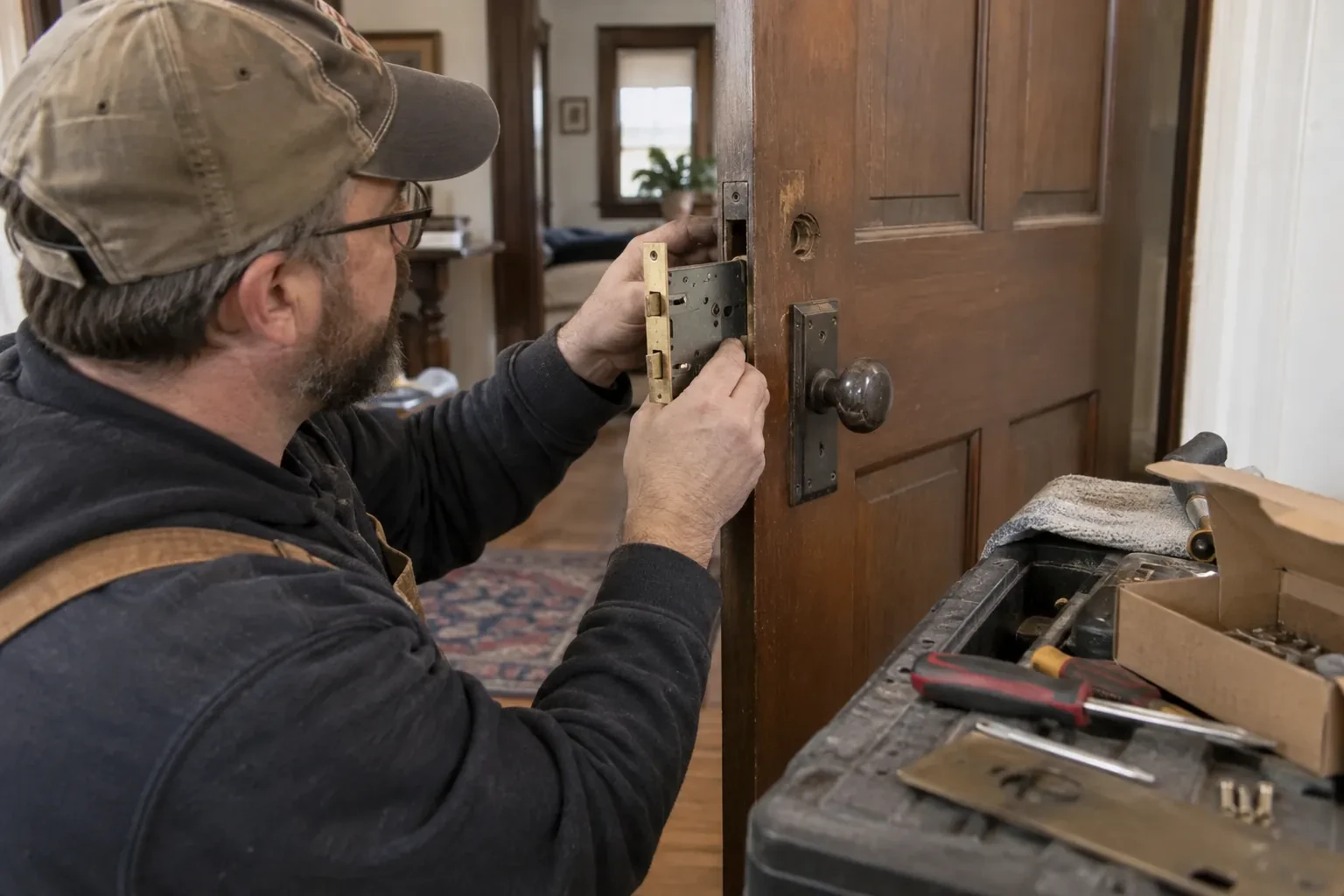
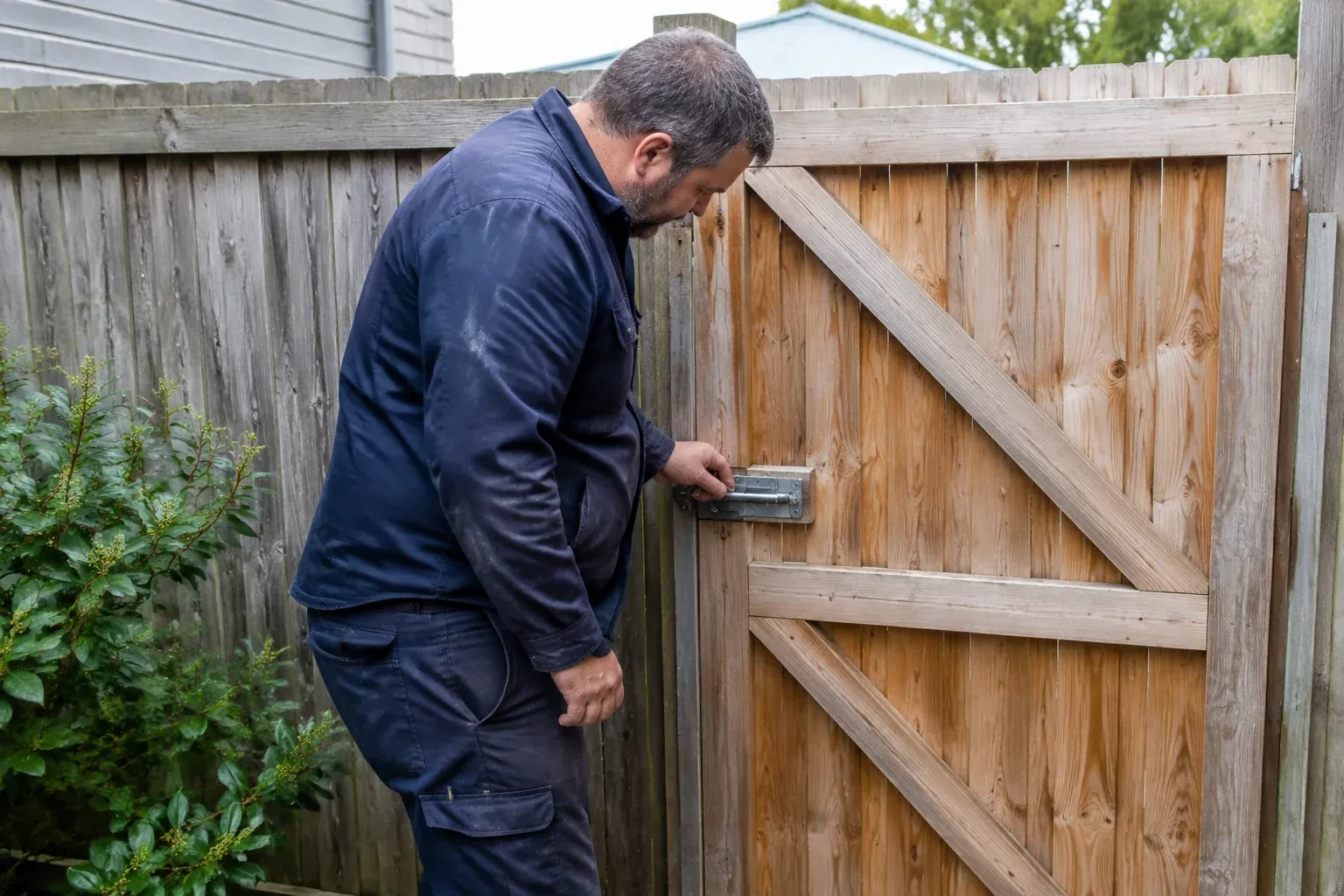
Before a new bolt goes in, the door has to close properly on its own, so the locksmith swings it a few times and watches. A door that drops on tired hinges, binds against thick weatherstrip or has to be pulled to latch will put a new deadbolt out of line the moment the season changes. Hinge screws are tested for grip, the gap around the door is read for evenness, and the existing latch is checked against its strike. Small corrections here, such as a longer hinge screw into the framing or a trimmed weatherstrip, are made first so the deadbolt can be set to a door that sits square and stays there.
- 2
Assembling the cylinder and thumb-turn
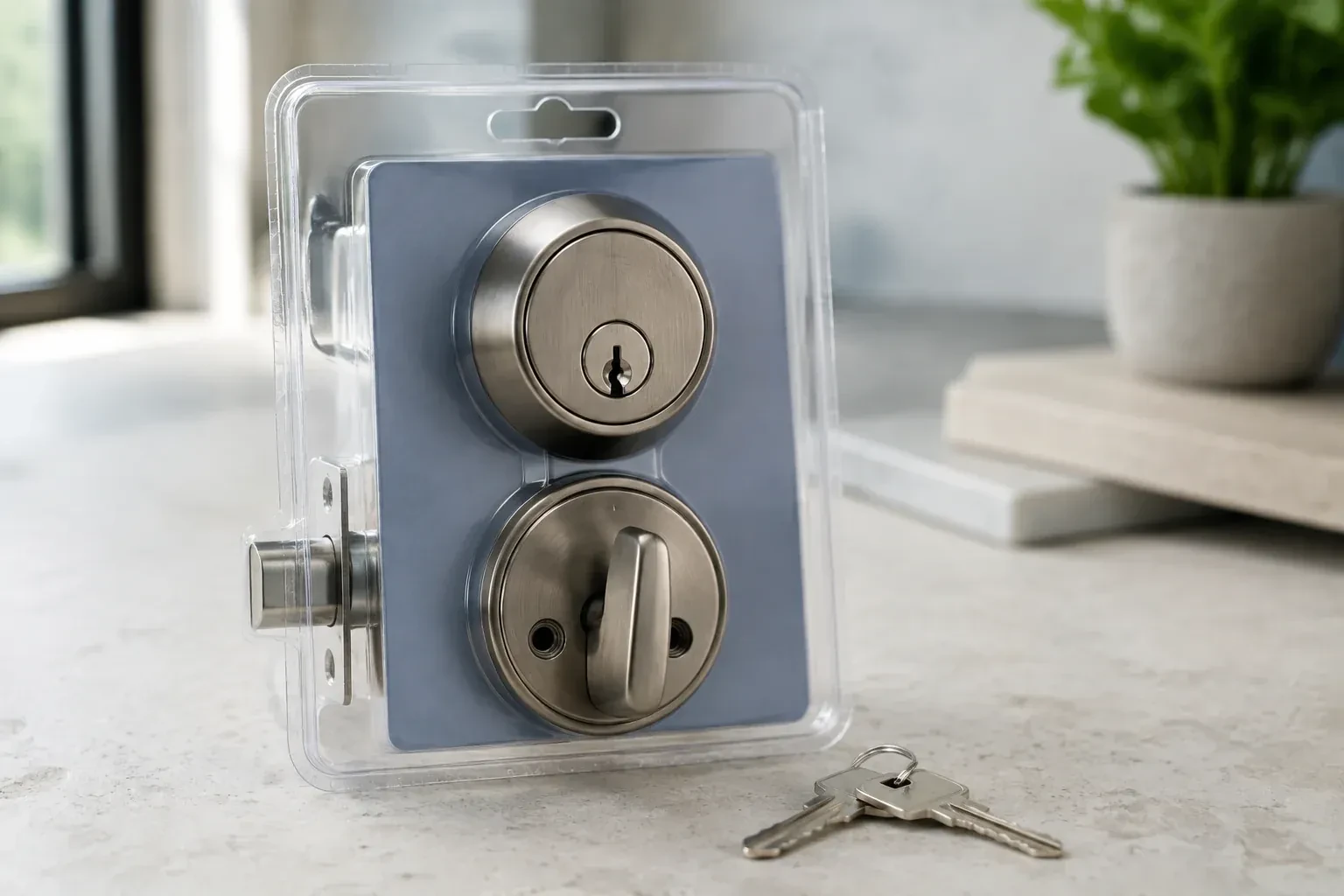
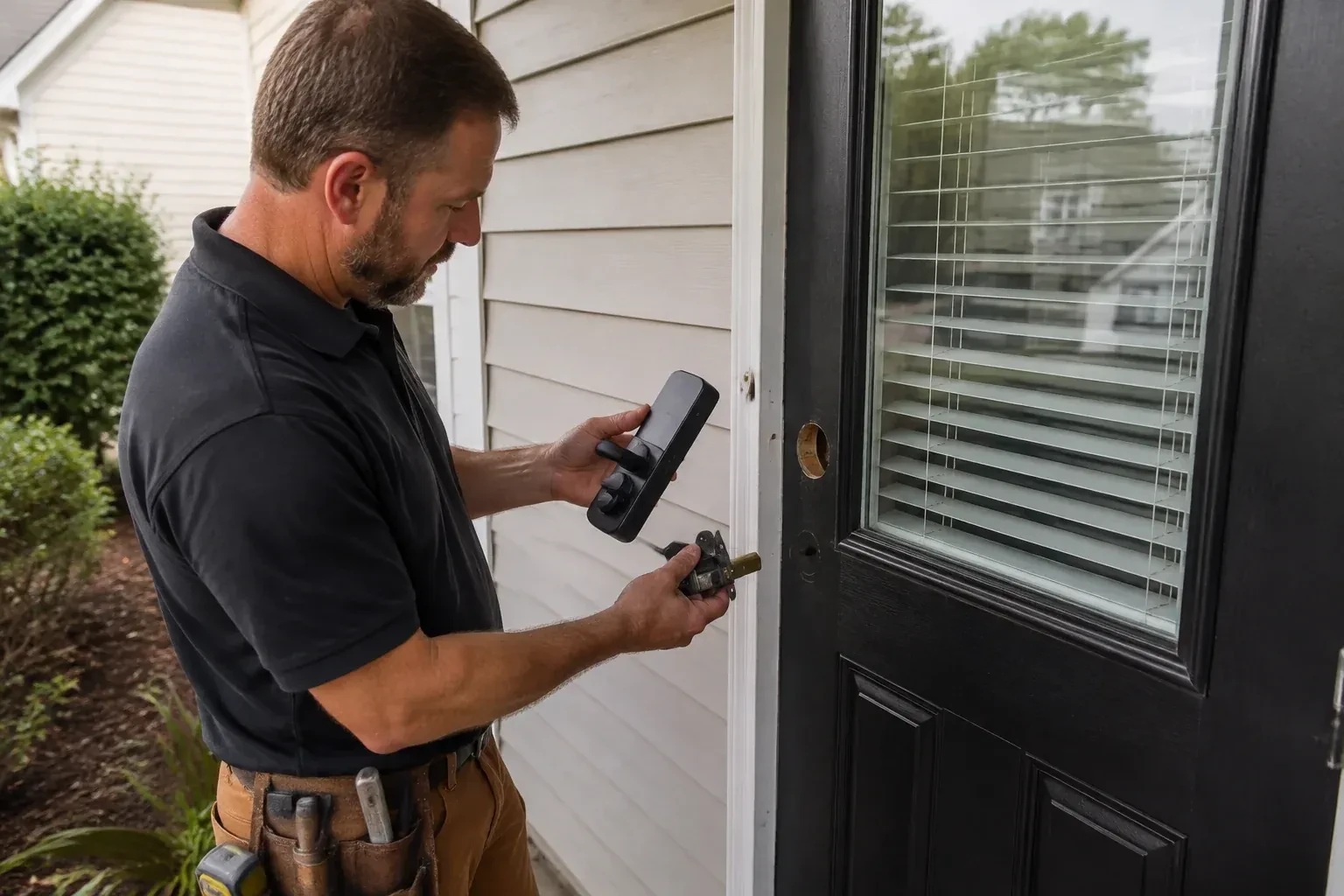
The outside housing goes on first, with its tailpiece threaded through the slot in the bolt cam and its mounting posts through the matching holes. Any plastic alignment bracket that ships with the lock is used on a 54 mm bore and removed on a smaller one. The inside thumb-turn plate is set against the door and the two long tapered screws are driven through it into the outside housing, snug rather than crushed, so the housings pull tight to the door without distorting the mechanism. The locksmith turns the thumb-turn before the door is closed to confirm the bolt throws its full length and returns without a catch.
- 3
Keys that open what they should
You leave with the keys sorted, whichever way you chose. If the new cylinder was pinned to your existing key, every ring in the house still works and the new door has simply joined the set. If it was set to a fresh key, you have a small bundle of new keys, cut from the pins rather than copied from a worn original, and a clear idea of which old keys no longer matter. Count them, decide who carries one, and test each in the new bolt before the locksmith leaves. A spare kept with a trusted neighbour or in a small lockbox is worth arranging on the same afternoon.
In the van
- 75 mm (3 in) strike screws
- Sharp chisel and mallet
- Dry PTFE lubricant
- Reinforced strike plate
- Manufacturer's bore template
What affects the quote
- 1
New bore or replacement into existing holes
Boring a door that has never had a deadbolt takes more time and tooling than dropping a new bolt into holes that are already there, and the quote reflects which of the two your door needs.
- 2
Grade and type of deadbolt
A builder-grade bolt, a residential model with a high security grade, and a heavy commercial-pattern deadbolt sit at different points in the hardware part of the quote, and the locksmith explains the differences.
- 3
Travel to the property
Distance and access are part of any call-out: a house on a suburban street and a rural property down a long road involve different driving time, and the quote says so.
Same fees day, night or weekend.
Deadbolt Installation: questions
How do I look after a deadbolt once it is installed?
Very little is needed. Each spring and autumn, lock the door from inside and feel whether the bolt still goes home without the door being pulled; if it hesitates, the door has moved with the season and a small strike adjustment restores it. Whatever lubricant the lock's own maker specifies keeps it smooth, often a dry PTFE or graphite type in the keyway and along the bolt, though some cylinders are meant to be serviced with oil. In winter, wipe road salt off the outside trim to protect the finish.
I just moved in. Should the new deadbolt be keyed to a new key?
It is a good moment for it. Nobody knows how many copies of a previous owner's key exist, so pinning the new bolt, and the rest of the exterior doors, to one fresh key retires all of them at once. Lock manufacturers list a move as one of the main reasons to rekey. You come away with a known number of keys, each tested in every door it is meant to open.
Should I choose a single-cylinder or a double-cylinder deadbolt?
For any door people leave the house through, a single cylinder with an inside thumb-turn is the sensible choice, and provincial building rules for dwellings call for exit doors that open from inside without a key. Double-cylinder bolts are keyed on both faces and are sometimes proposed where glass is near the lock, but a captive thumb-turn, laminated glass, or a tested security-film system with its specified attachment, addresses that without a key on the inside.
Deadbolt Installation near you
Brant, Ontario
Brantford information
- Town
- Brantford, Brant, Ontario
- In business
- 17 years
- Hours
- Open 24/7 · nights, weekends and holidays, same fees
- Phone
- (548) 900-9717
- Visits
- On-site assessment preferred. Request a visit or call.
What the census means at the door
63%
Older homes. About 63% of homes in Brantford were built in 1980 or earlier, according to the 2021 Census.
Where housing is mostly older, many entries still have only a knob lock and no deadbolt at all. Adding one is a straightforward job on a solid wood door, and it is the single upgrade that changes most for a house of this kind.
61%
Mostly houses. Single-detached houses make up about 61% of homes in Brantford (2021 Census).
Detached houses collect hardware from every renovation. A locksmith visiting one often finds three keyways, two finishes and one door that never latched right. Sorting all of that into a consistent, working set is a satisfying afternoon's work.
Open 24/7
Request a visit
The back door has a deadbolt in name only: a short bolt, a thin brass strike held by two little screws, and a jamb you can flex with your palm.
Call now · open 24/7(548) 900-9717- On-site assessment preferred
- Same fees day, night or weekend
- 17 years in business