Plan ahead High security · Tranquility
Safe Installation & Servicing in Tranquility
The office is moving three blocks over, and the old commercial safe that has sat bolted to the concrete for fifteen years now needs to come out, travel across town, and go back down just as solidly.
Call now · open 24/7(548) 900-9717In plain words
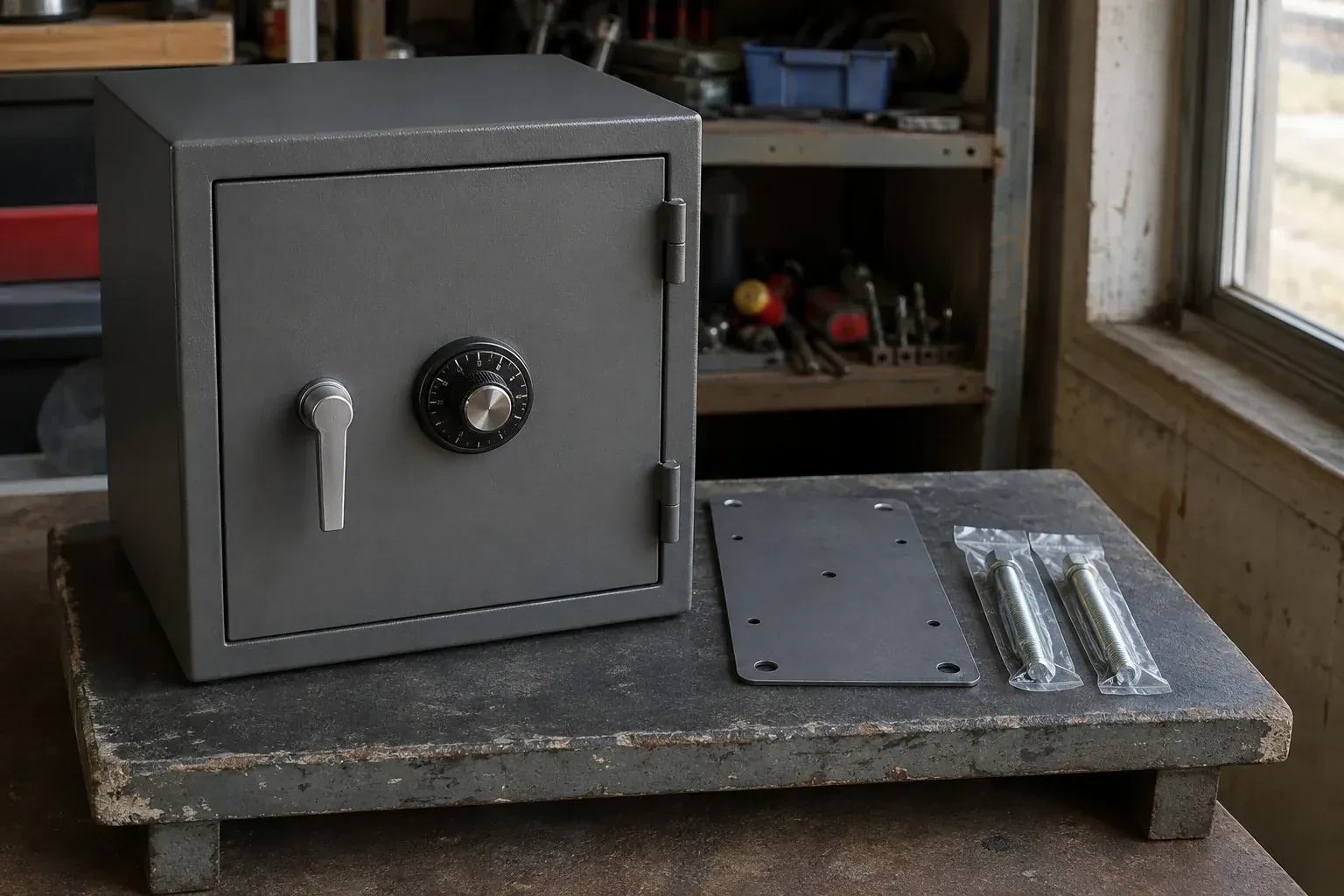
For a household bringing in its first real safe, the service covers everything between the empty spot on the floor and a working, anchored unit with a combination only the family knows. The locksmith walks through what the safe needs to hold, checks the floor or wall it will sit against, positions and levels it, and secures it with anchor bolts suited to that surface. The lock is set and cycled several times with the owner watching, so the last step of the visit is confirming, together, that it opens and closes exactly as it should.
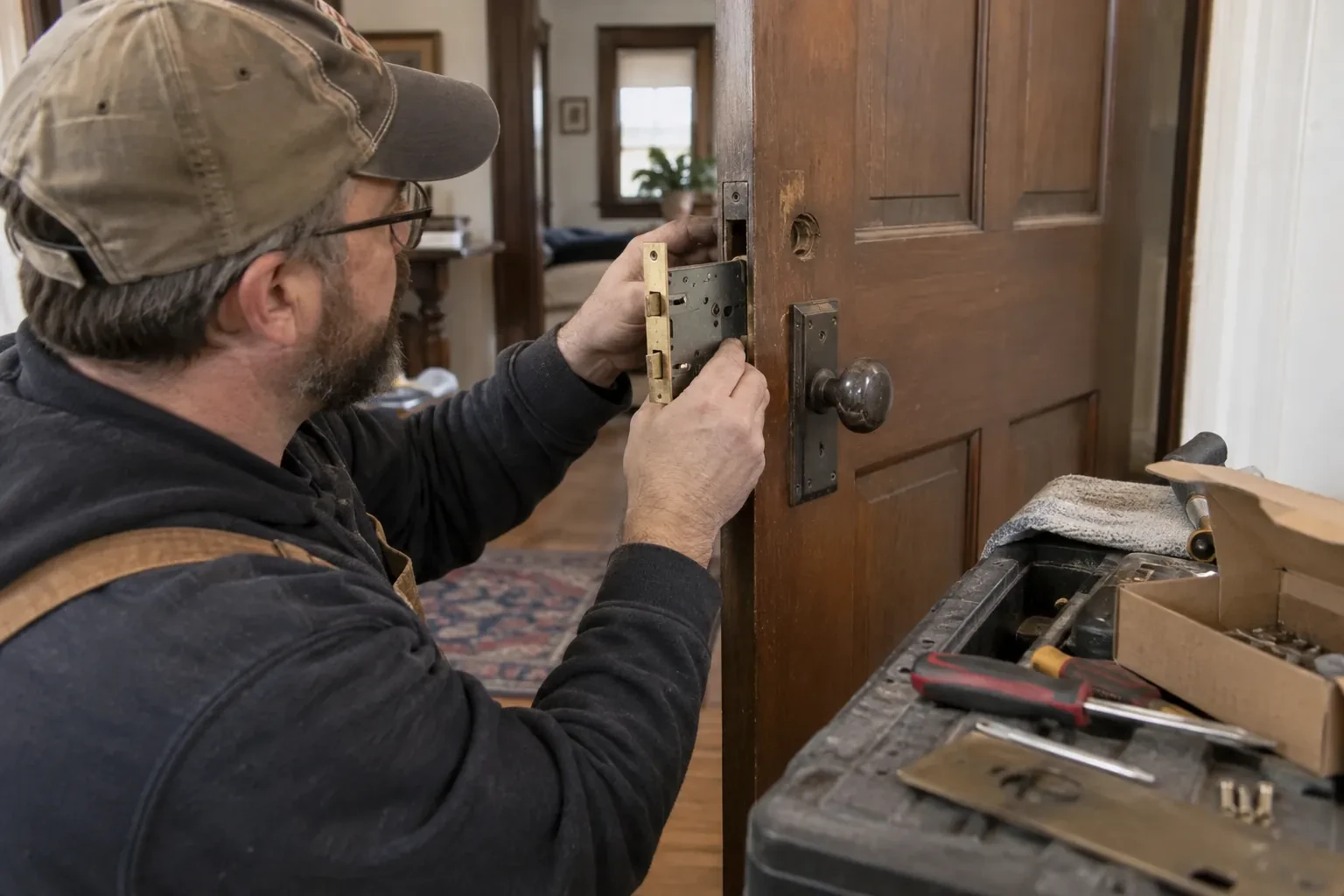
How the visit goesThe keypad on the office safe blinks a low-battery warning every morning now, and whoever notices it first quietly hopes someone else deals with it before the batteries finally give out mid-week.
Safe Installation & Servicing · Tranquility
How the visit goes
- 1
What the safe actually needs to hold
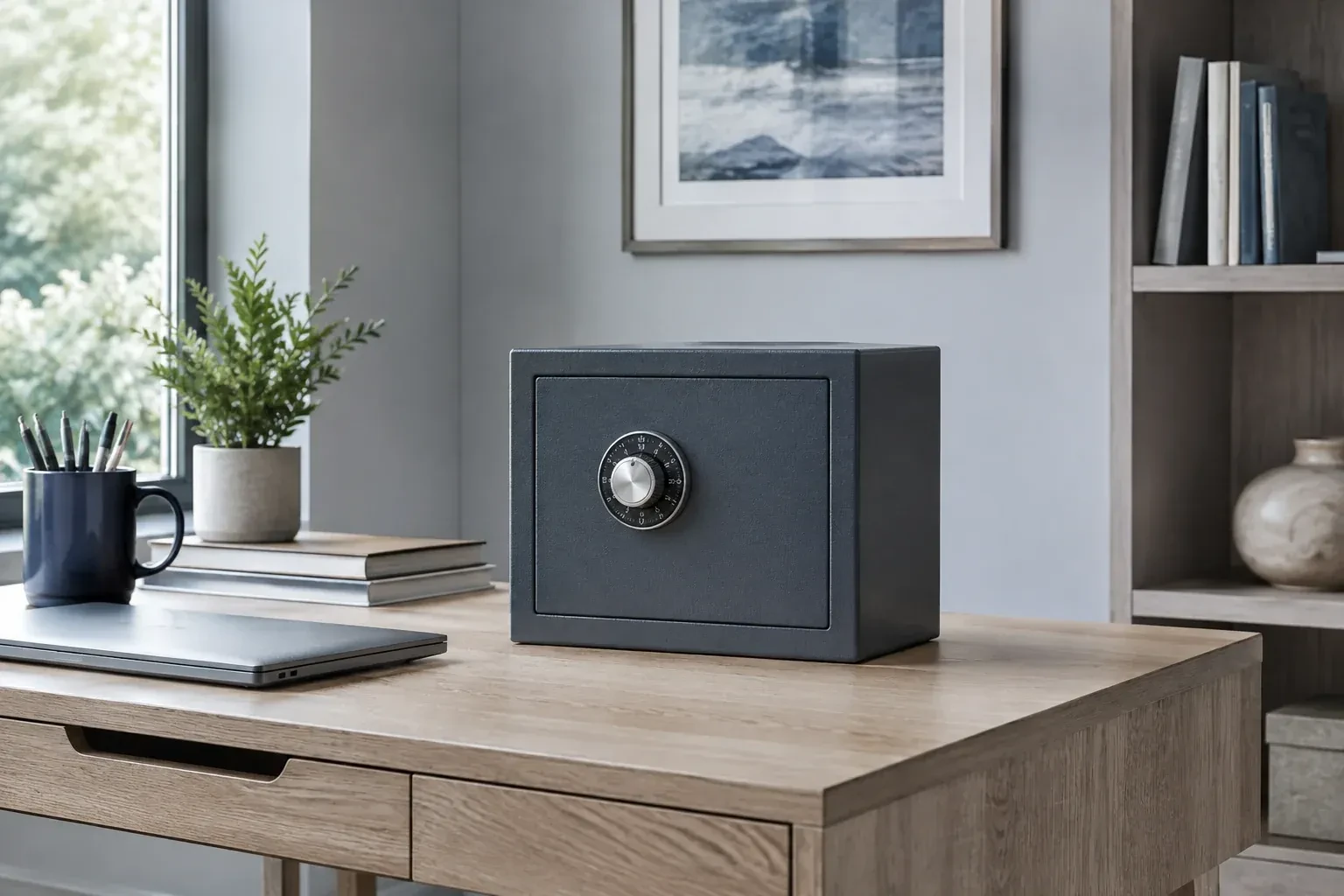
Before any hardware is chosen, the locksmith asks what will actually sit inside: cash from a till, jewelry, firearms, paper contracts, backup drives, or some mix of all of it. Each of those has a different enemy. Cash and jewelry are mainly at risk from tools and time, so a burglary rating matters most. Paper is mainly at risk from heat, so a fire rating matters most, and digital media needs a much lower internal temperature than paper to survive the same fire. Answering this question first is what keeps the rest of the visit from guessing.
- 2
Setting it level and in its final position
Once the safe is on site, it is moved into position with a hand truck, dolly, or rigging suited to its weight, protecting door frames and flooring along the way rather than dragging it across a room. It is set level using shims where the floor is slightly uneven, since a safe that sits even a little off level can bind its own bolt-work over time. The final position also leaves enough clearance for the door to swing fully open and for anchor bolts to be reached from underneath or behind.
- 3
A schedule for the next visit
A safe does not announce when it needs attention the way a squeaky hinge does, so it helps to put a rough date on the calendar rather than waiting for a sign of trouble. Checking the bolt-work, the batteries, and the door seal every year or two catches small stiffness or corrosion long before it becomes a stuck lock. Businesses with heavier daily use, such as a till safe opened many times a shift, generally benefit from a shorter interval between checks than a document safe opened rarely.
In the van
- Nine-volt backup battery
- Level and floor shims
- Rated safe (burglary and fire)
- Torque wrench and socket set
- Moving dolly and floor protection
What affects the quote
- 1
Lock type and number of users
A mechanical dial lock with one combination is a simpler setup than an electronic keypad supporting several separate user codes for different staff members or household members.
- 2
Anchoring difficulty at the chosen spot
A straightforward concrete floor is the simplest case, while a wood subfloor needing joist location, or a tiled surface needing an alternative fastening point, both add steps to the anchoring work.
- 3
Floor or wall construction
Solid concrete, a wood subfloor reaching into joists, and tile each call for a different anchoring approach and different hardware, and the substrate is confirmed before any drilling begins.
Same fees day, night or weekend.
Safe Installation & Servicing: questions
Will anchoring damage my flooring?
Anchoring leaves small holes at the anchor points, sized to the bolts being used, and on a finished floor these sit under the safe itself where they are never seen again. On tile, the risk of cracking nearby tiles is real enough that an alternative fastening point or a different spot in the room is often chosen instead of drilling straight through the tile itself.
What kind of floor can a safe be anchored to?
Solid concrete is the most straightforward surface, taking a masonry anchor bolt directly. A wood subfloor works too, provided the anchoring reaches into the floor joists beneath the surface layer rather than just the plywood or the flooring on top. Tile is the awkward case, since a bolt through it tends to crack the surrounding tiles, and an alternative anchoring point or a different spot in the room is usually the better route there.
What is the difference between a fire rating and a burglary rating?
They come from two different kinds of tests, and burglary ratings are not all one kind either. Some are timed in minutes, measuring how long a trained attempt with real tools takes to force the door open; others are construction classifications based on steel thickness rather than a timed attack. A fire rating is measured in hours, from a furnace test tracking how hot the interior gets while the outside reaches roughly 850 to 1,000 degrees Celsius. A high number on one says nothing about the other.
High Security Locks
Safe Installation & Servicing near you
Brant, Ontario
Tranquility information
- Town
- Tranquility, Brant, Ontario
- In business
- 17 years
- Hours
- Open 24/7 · nights, weekends and holidays, same fees
- Phone
- (548) 900-9717
- Visits
- On-site assessment preferred. Request a visit or call.
What the census means at the door
63%
Older homes. About 63% of homes in Brantford were built in 1980 or earlier, according to the 2021 Census.
Older homes tend to have had many hands on their doors: owners, tenants, tradespeople, family. A locksmith visiting such a house pays attention to who holds keys now, and rekeying or a keyed-alike set often matters more than any new hardware.
61%
Mostly houses. Single-detached houses make up about 61% of homes in Brantford (2021 Census).
In areas of single houses, the door nobody watches is the side or back entry. It often has the weakest lock on the property. Fitting a proper deadbolt and a reinforced strike there is a modest job that closes the obvious gap.
Open 24/7
Request a visit
The office is moving three blocks over, and the old commercial safe that has sat bolted to the concrete for fifteen years now needs to come out, travel across town, and go back down just as solidly.
Call now · open 24/7(548) 900-9717- On-site assessment preferred
- Same fees day, night or weekend
- 17 years in business